Keywords
Death Drive
Metapsychology
Nirvana Principle
Destruction
How to Cite
Abstract
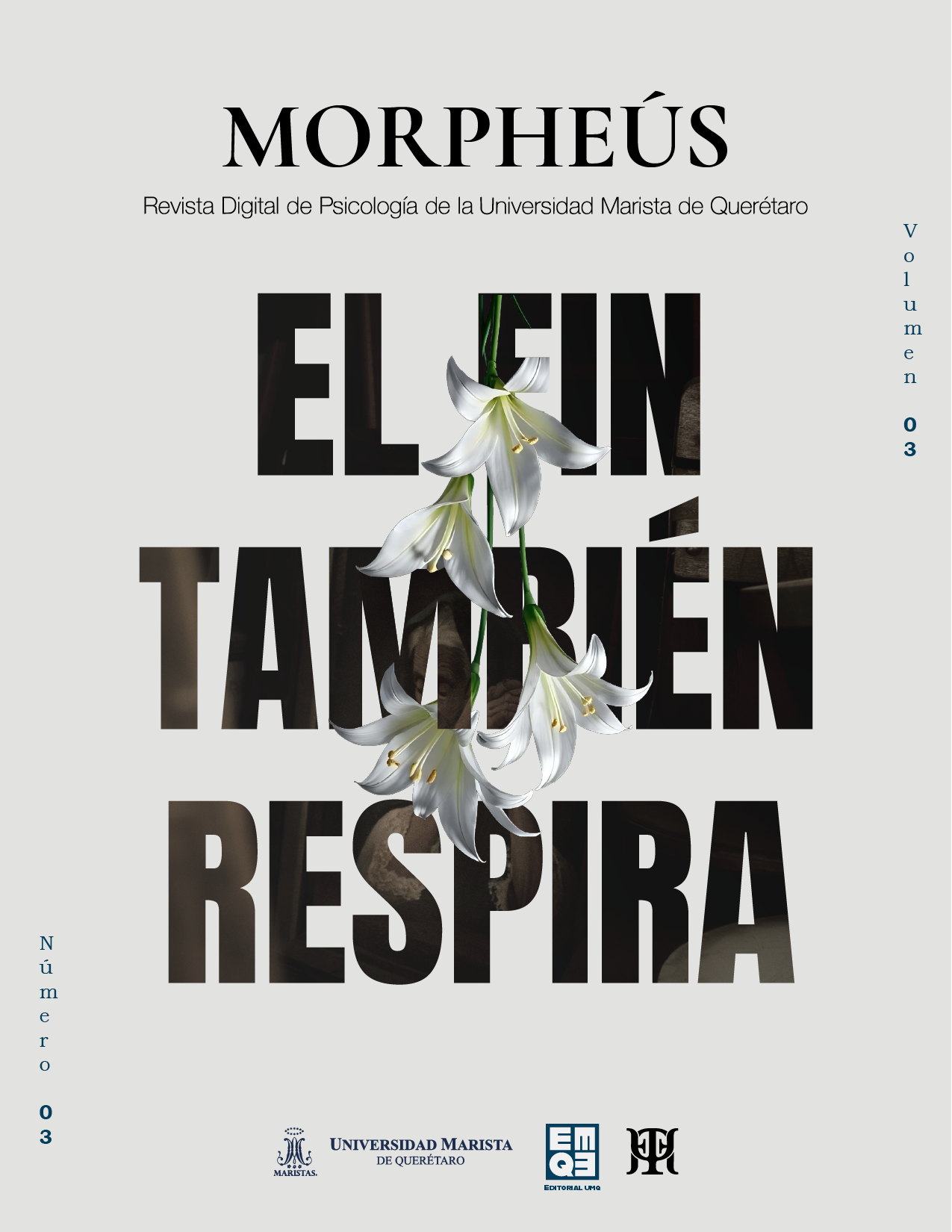
The essay The Dying Nature of Being develops a critical reexamination of the drive theory originally proposed by Sigmund Freud, centered specifically around the constant tension between Eros and Thanatos. Working from this conceptual foundation, the authors present a highly disruptive hypothesis: the life drive does not necessarily orient itself toward preservation as an ultimate goal. Instead, it might operate merely as a subordinated mechanism serving the death drive, purposefully extending existence with the primary objective of eventually leading it toward its unavoidable dissolution.
At a metapsychological level, this text prominently highlights the dynamic, conflictual character of the drives. The neurotic symptom is thus conceived as a complex compromise formation that effectively allows for the partial discharge of repressed tensions. Repetition compulsion alongside self-destructive behaviors are directly interpreted as indirect expressions of Thanatos, oriented specifically toward the absolute reduction of tension, functioning in strict accordance with the nirvana principle. In this manner, pain unequivocally acquires a foundational structural status within psychic life.
On a socio-historical level, an explicit correlation is established between this dynamic and broader collective processes. Human technological and cultural development evidences a recurrent tendency toward destruction, prominently visible through the military instrumentalization of science. Violence emerges as a primary element, while normative institutions like morality, religion, or law attempt to contain it.
Finally, the essay acknowledges Eros as a force for sublimation and meaning creation; artistic production and affective bonds transform primary impulses into socially significant forms. However, this capacity always coexists within an unavoidable destructive interdependence.

This work is licensed under a Creative Commons Attribution 4.0 International License.
Copyright (c) 2026 Zazil Merari Reyna Osorno, Azor Geraldo Osornio Gualito, Pablo Andrés Reynoso Lomelín (Autor/a)